Healthy teeth for children

Healthy teeth are an important part of your child’s overall health and well-being. Helping your child develop good oral health begins at birth.
When will my baby’s teeth appear?
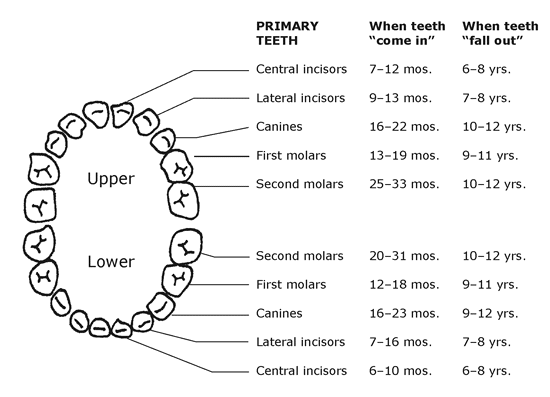
The first primary (or “baby”) tooth usually comes at about 6 months, but teeth might appear as early as 3 months or late as 12 months.
Every child is different, but most will have all 20 primary teeth by 3 years. At around 5 or 6 years, your child will start to lose their primary teeth to make room for their permanent teeth.
Why are primary teeth important?
Primary teeth give shape to your child’s face, help guide permanent teeth into the right position and are needed for learning to eat and to speak. It’s important to care for them well.
All teeth have an outer layer of enamel (a thin, hard, white substance that covers the tooth). This layer of enamel of primary teeth is thinner than the enamel of permanent teeth. This puts them at risk for tooth decay, which can begin even before the first tooth appears. Early childhood tooth decay is decay that affects the primary teeth in children less than 6 years of age.
Decay is caused by bacteria and happens more easily if teeth often come into contact with sweet liquids—such as formula, milk, juice, and even breast milk (which contains sugar)—and are not cleaned regularly. Breast milk is the healthiest, and decay can be prevented by cleaning your baby’s teeth after breastfeeding and before putting the baby to sleep.
Early childhood tooth decay can affect your child’s health and cause pain, making it hard for your child to sleep, eat or speak. It can also affect your child’s ability to concentrate and learn. Children who develop dental decay at an early age are more likely to suffer from it throughout childhood.
Tips for good oral health from birth to age 4
From birth to 12 months
- Wipe your baby’s gums with a soft, clean, damp cloth twice a day.
- As soon as the first teeth appear, clean them at least once a day (usually at bedtime) with a soft bristle toothbrush designed for babies. Lay your baby on a flat surface or with their head cradled in your lap to brush their teeth.
- Don’t leave your baby in bed with a bottle.
- After 6 months:
- Introduce a sippy cup.
- Avoid juice, as it is unnecessary. If you do offer it, it should be less than 125 mL (4 oz) per day, in a cup rather than a bottle, and only as part of a meal or snack.
- If a bottle is needed at naptime, offer water rather than milk or juice as these other beverages contain sugar.
- If you breastfeed before naptime or bedtime, be sure to clean your child’s teeth before they go to sleep.
- Never sweeten a soother.
- Do not put a soother or bottle nipple in your own mouth for any reason. Bacteria (including those that cause tooth decay), viruses and yeast infections can be passed between you and your child this way.
- Infants should see a dental professional (dentist, dental therapist or hygienist) within 6 months of their first tooth coming out or no later than 12 months of age.
From 1 to 2 years
- Try to take your child for a first dental visit by 12 months of age.
- Brush your child’s teeth daily. Your dental professional may suggest you start using a small amount (the size of a grain of rice) of fluoride toothpaste.
- Check for signs of early childhood tooth decay once a month. Lift your child’s upper lip and look for chalky-white or brown spots on the teeth or along the gum line. If you see any, take your child to a dental professional as soon as possible.
- Switch to a regular cup for all drinks between 12 and 15 months.
- Limit soother use to nap and bedtime.
From 3 to 4 years old
- Teach your child “2 for 2,” which means brushing twice a day for 2 minutes each time.
- Start using fluoride toothpaste, the amount of a green pea, and teach your child to spit rather than swallow. Supervise your child while they brush their teeth.
- Encourage your child to do some brushing, with you completing the job, making sure that all tooth surfaces have been cleaned.
For all ages
- Wash your hands before and after brushing teeth.
- Rinse toothbrushes thoroughly after brushing and make sure that each one can dry without touching other toothbrushes.
- Replace toothbrushes every few months, when the bristles become flattened.
- Replace toothbrushes after getting over a cold or flu.
- Offer water between meals. Avoid offering candy, dried fruit (including raisins) and sugared drinks or juices.
- Try to take your child for regular dental visits (every 6 months, unless otherwise suggested by your dental health professional.
- If your child continues to suck their thumb as permanent teeth begin to appear, talk to your doctor or dentist.
How can I help my teething baby?
When your child is getting their teeth, their gums may be swollen and tender. Some things can help:
- Rub the gums with a clean finger.
- Offer them something to chew on. A wet facecloth placed in the freezer for 30 minutes can be helpful, or a teething ring made of firm rubber.
- Do not rub anesthetic/numbing gels on your child’s gums. Your child may swallow it.
- Do not give them teething biscuits, which may contain sugar.
- Do not ignore a fever. If your baby is younger than 6 months call a doctor. Older children with a mild fever can be treated at home, as long as they get enough liquids and seem well otherwise.
What is fluoride?
Fluoride is a natural mineral that is found in soil, water, and in various foods. Many communities in Canada add fluoride to the local water supply to help prevent tooth decay. It can also be found in many types of toothpaste, mouthwash and varnishes. Varnish is polish applied to the teeth by a dental professional or dental/oral health aide.
Children who start using products with fluoride from an early age have fewer cavities than those who don’t use toothpaste with fluoride.
How does fluoride work?
Fluoride helps prevent tooth decay by strengthening the outer enamel layer of the teeth.
If you consume fluoride from sources such as drinking water, it gets absorbed in your bloodstream. Then it becomes part of the enamel on the inside of the tooth.
If too much fluoride gets into the inside of a developing tooth, it can cause a condition called fluorosis.
What is fluorosis?
If someone gets too much fluoride there can be some discolouration of the teeth. This is called fluorosis, which causes white spots or blotches on teeth. These are not harmful. But white spots on teeth can also be a sign of early cavities. Your dentist will have to look at your child’s teeth to know for sure. The majority of fluorosis cases are mild.
In more severe cases of fluorosis, these spots can stain or become dark. The teeth can become brittle, chipped or “pitted”.
How much fluoride does my child need?
The right amount of fluoride will prevent tooth decay, and not cause fluorosis.
- A way to prevent tooth decay is to have the community add fluoride to the drinking water supplies.
- The right amount is about 0.7 parts per million (ppm) in drinking water, which is enough to prevent decay, but not so much that it causes obvious fluorosis. You can check with your local municipality or First Nation to find out how much fluoride is in your drinking water supply.
- Natural sources of water may also have fluoride. If your water comes from wells or springs, you can have it tested. If it contains less than 1.5 ppm of fluoride, it is safe to drink although there is no additional prevention of tooth decay above 0.7 ppm.
- If the level of fluoride in your water supply is 0.3 ppm or less, ask your dentist or doctor whether a supplement or fluoride varnish is needed.
What about fluoride from toothpaste?
Start brushing your child’s teeth with a pea-sized amount of a fluoride toothpaste by the time they are 3 years old. If your child is under 3 years of age and you think they may be at risk for early childhood tooth decay, talk to your dental professional to find out if it is a good idea to start using a small amount (the size of a grain of rice) of fluoridated toothpaste.
What about supplements?
Fluoride is available as drops or lozenges, but most children don’t need fluoride supplements as drops or lozenges. If there is a reason to give your child fluoride supplements, your dentist or doctor will recommend them.
Reviewed by the following CPS committees
- Community Paediatrics Committee
- First Nations, Inuit and Métis Health Committee
- Public Education Advisory Committee
Last updated: April 2021