
Vaccination and your child
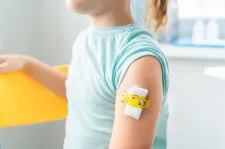
Vaccination is the best way to protect your child against many dangerous diseases. In Canada, vaccines prevent illnesses such as diphtheria, tetanus, pertussis (whooping cough), polio, Haemophilus influenzae type B (Hib), rotavirus, hepatitis B, measles, mumps, rubella, chickenpox, pneumococcal and meningococcal diseases, human papillomavirus virus (HPV), and influenza.
What vaccines should my child receive?
Your child should receive all the recommended vaccines. The timing for each shot may be slightly different depending on where you live. Here is what the Canadian Paediatric Society and the National Advisory Committee on Immunization currently recommend:
- 5-in-1 or 6-in-1 vaccine (also known as DPTP-Hib), DPT-polio, or Hib vaccine protects against diphtheria, tetanus, pertussis, polio, and Hib disease, as well as hepatitis B if 6-in-1.
- Rotavirus vaccine protects infants against rotavirus, the most common cause of serious diarrhea in babies and young children.
- Pneumococcal vaccine protects against infections caused by Streptococcus pneumoniae, including meningitis (a brain infection), pneumonia, and ear infections.
- Meningococcal vaccine protects against diseases caused by the meningococcus bacteria, including meningitis and septicemia, a serious blood infection.
- MMR vaccine protects against measles, mumps, and rubella.
- Varicella vaccine protects against chickenpox, a very uncomfortable and sometimes serious infection.
- Hepatitis B vaccine protects against hepatitis B, a serious infection of the liver.
- dTap vaccine protects adolescents against diphtheria, tetanus and pertussis (whooping cough).
- HPV vaccine protects against the types of HPV that cause cervical cancer, some other cancers, and genital warts.
If your child has a chronic health condition, extra vaccines may be needed to protect them from infections that healthy children tolerate well. If the chronic condition causes a problem with their immune system, some vaccines may need to be put off to a later time, and a few vaccines may not be given at all. Speak to your doctor.
Should my child receive any other vaccines?
The CPS recommends that all children over 6 months old get a flu shot each year. The vaccine is especially important for children less than 5 years of age, and for older children with chronic conditions who are at high risk of complications from the flu. The flu shot is also safe and highly recommended for pregnant and breastfeeding women. Since infants less than 6 months of age cannot get the flu shot (it won’t work), antibodies against the flu are transferred to the baby from the mother before birth and through breast milk.
The CPS also urges all children and youth over 6 months old to get the COVID-19 vaccine.
If travelling, speak to your doctor about vaccines that can protect your child.
Are vaccines safe?
Vaccines are very safe. There are rarely reasons not to get vaccinated.
What if my child is sick when the vaccine is due?
If your child is very sick when it is time for a vaccine, talk to your doctor or health care provider.
What are the risks of not vaccinating or not vaccinating on time?
The diseases prevented by infant and childhood vaccines are serious and even deadly. Measles can spread to the brain, cause brain damage and death. Mumps can cause permanent deafness. Polio can cause paralysis. Sadly, these diseases have not disappeared. There is no treatment and no cure for diseases like measles, polio and tetanus. The only way to protect your child is through vaccination.
How can I minimize the pain?
Needles can hurt. To lessen the pain you can:
- Apply a topical anesthetic (a cream that causes temporary numbness) an hour before getting the needle. You may have to confirm with your doctor what part of your child’s body the shot will be given (for example, the arm or the leg). Your pharmacist can help you find the cream.
- Nurse your baby while they get the needle, or give your baby sugar water (with a teaspoon or pacifier) just before the shot.
- Use distractions (blow bubbles, read a book), suggest deep breathing, remain calm and physically comfort your child (cuddle, hold hands) during the needle.
Do not give your child ibuprofen or acetaminophen before or around the time of vaccination as it does not prevent the pain of injection and it could have an impact on how well the vaccine works. These medications can be used to treat fever, pain, or other bothersome side effects if they develop after vaccination.
For tips on how to make vaccines as pain-free as possible:
- The CARD System: Improving the vaccination experience
- Reduce the Pain of Vaccination in Children Under 3 Years or watch this video.
- Reduce the Pain of Vaccination in Kids and Teens or watch these videos.
- Dealing with needle pain and fear (Canadian Institutes of Health Research)
- It Doesn’t Have To Hurt (IWK Health Centre)
Routine childhood immunization schedule
|
Age at vaccination |
2 mos |
4 mos |
6 mos |
12 mos |
18 mos |
4-6 yrs |
9-13 yrs |
14-16 yrs |
|
|
Diphtheria1 |
X |
X |
X |
X |
|||||
|
Diphtheria |
X |
||||||||
|
Rotavirus2 |
2 or 3 doses between 6 weeks and 32 weeks of age |
||||||||
|
Mumps |
X3 |
X3 or X3 |
|||||||
|
Chickenpox |
X4 |
X4 or X4 |
|||||||
|
Pneumococcal conjugate |
X |
X |
(X)5 |
(X)5 |
|||||
|
Meningococcal conjugate6 |
X |
||||||||
|
Flu (Influenza) |
All children over 6 months, 1-2 doses |
||||||||
|
Hepatitis B7 |
Infancy or |
X |
|||||||
|
HPV8 |
X |
||||||||
|
|
|
||||||||
Notes:
- In some provinces, children get a 5 in 1 vaccine and will receive hepatitis B as a separate vaccine, either in infancy or early adolescence.
- In other provinces, children receive a 6 in 1 vaccine, which protects against diphtheria, tetanus, pertussis (whooping cough), poliomyelitis (polio), Haemophilus influenzae type b (Hib) and hepatitis B. Your doctor will tell you which vaccine is used in your province or territory. Your child will need 2 or 3 doses depending on the vaccine. Doses are given at least 4 weeks apart.
- Two-dose programs for MMR are given in all provinces and territories. First dose given at 12 to 15 months. Second dose MMR is given either at 18 months or 4-6 years of age. If the child is past the age at which the second MMR vaccine is recommended, the second dose can be given 1-2 months after the first.
- Children should get 2 shots for chickenpox (varicella); the first when they are 12 to 15 months of age and a second either at 18 months or at 4 to 6 years of age. If the child is past the age at which the second dose of chickenpox vaccine is recommended, the second dose can be given 6 weeks after the first. A combined MMR-varicella vaccine is sometimes used.
- In some jurisdictions, a dose is also given at 6 months. The booster may be given at 12 to 15 months of age.
- In some jurisdictions, doses are also given earlier, starting at 2 months. Adolescents should get a booster dose of MCV-4 or MCV-C at about 12 years of age.
- Hepatitis B is given in infancy in some jurisdictions and to pre-teen school children in others. Two or three doses are given, depending on age and the volume of vaccine used.
- A second dose is given 6 to 12 months after the first.
For information on which vaccines are covered and when given in your province or territory, visit: www.phac-aspc.gc.ca/im/is-vc-eng.php.
Keeping your child’s vaccination record up to date
Ask the doctor or nurse to give you a written record (usually by writing it in your child’s vaccine booklet) and take this record with you whenever you take your child to a doctor, a clinic or hospital. An up-to-date vaccine record is especially important if you move to a new province or territory, as vaccine schedules are not the same everywhere. Your child may miss vaccine doses if your new doctor or clinic does not know exactly which vaccines they have already received.
You can also use the CANImmunize smartphone app. CANImmunize is a digital tool for Canadians that securely stores their vaccination records and helps them get vaccinated on time. The app also provides access to information and resources about vaccination from trusted Canadian health sources, so people can make informed vaccination decisions for themselves and their families.
Additional resources
- Routine vaccines are the foundation of a healthy future (Immunize Canada, Toronto Star)
- Immunization schedule tool (Public Health Agency of Canada)
- A Parent's Guide to Vaccination (Public Health Agency of Canada)
- CARD game for kids (Immunize Canada and partners)
- Immunize Canada
- CANImmunize APP
- Travel Health (Public Health Agency of Canada)
Reviewed by the following CPS committees
- Infectious Diseases and Immunization Committee
Last updated: October 2021