Toilet learning
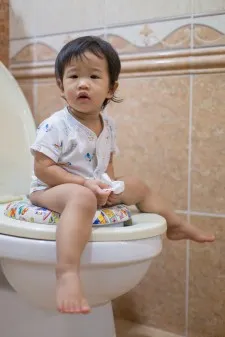
When it comes to toilet learning, every child is different. Some children are ready as young as 18 months, but most start between 2 and 4 years of age.
As a parent, it’s your job to be patient and follow your child’s cues through each step of the process.
How do I know when my child is ready?
Your child is probably ready for toilet learning when they:
- Shows an interest in the potty (by watching you, or by liking books about learning to use the potty).
- Is dry in their diaper for several hours in a row.
- Has regular and predictable bowel movements, or knows when they are urinating or having a bowel movement. For example, your child might go into another room or hide behind furniture.
- Is steady and balanced when sitting on the toilet or potty.
- Can follow one or two simple instructions.
- Can let you know when they need to use the potty.
- Wants to be independent.
Toilet learning won’t happen overnight. It can take between 3 and 6 months before your child is out of diapers for good.
Make sure that you have enough time to patiently help your child every day. If others care for your child, tell them about your plans for toilet learning. It’s important that everyone is consistent and working together.
How do I help my child learn to use the toilet?
Plan
Your child might be more stable on a potty chair – so that their feet can touch the floor – than on a regular toilet. If you don’t use a potty, you’ll need a toilet seat adapter and a footstool. Put the potty in a place that your child can get to easily. You might want to put one on each level of your house if you have more than one floor, or more than one bathroom.
When you start:
- Dress your child in clothes they can pull up and down easily.
- Choose words for body fluids, functions and parts. Using the right words, such as urine, bowel movement, penis and vagina, can help avoid confusion or embarrassment. Avoid negative words like “dirty” or “stinky,” which can make your child feel self-conscious.
- Let your child watch you use the toilet or pretend to help a favorite doll or stuffed animal use the toilet.
- Always go with your child to the bathroom.
Practice
- Develop a routine. Have your child sit on the potty at specific times during the day, such as first thing in the morning, after meals or snacks, before and after naps, and at bedtime.
- Help your child get used to the potty. Let them sit on the potty while fully dressed, and then encourage them to sit on it for a few minutes without wearing a diaper.
- Watch for signs that they need to use the toilet. Encourage your child to tell you when they need to go. Be sure to praise them, even if they tell you after the fact.
- Boys usually learn to pee sitting down first. This is okay. They can learn to stand up later.
- Reading to your child while they sit on the potty may help them relax.
- Show your child how to wipe properly. Girls should wipe from front to back. Most will need you to wipe for them, especially after bowel movements, until preschool age.
- Teach your child to wash their hands after using the toilet.
- When your child has used the potty successfully for at least a week, suggest they try cotton underpants or training pants. Make this a special moment.
Praise and be patient
- Praise your child often. Be patient and cheerful. Rewards are not necessary.
- Expect accidents – they will happen! Be sure not to punish or overreact. It will help to have a change of clothes on hand.
What if toilet learning doesn’t work?
If the first try at toilet learning doesn’t work, your child just might not be ready. Don’t be disappointed or upset. You can’t rush your child into using the toilet. If your child refuses to use the potty, take a break from the training for about 1 to 3 months.
Your child may not want to pass a stool in a potty or the toilet, especially if they don't have good support for their feet. If that happens, let them have bowel movements in a diaper so they don't get constipated. Constipation can cause bowel movements to be painful. If it hurts, it’s likely to take even longer to learn to use the toilet. If you’re worried that your child is constipated, talk to your doctor about what you can do. Your child will be much more successful toilet learning once the constipation is treated.
My child was using the potty well but started having accidents again. Is this normal?
Sometimes a child who has been using the potty will slip back and start to have accidents. This can be caused by a period of stress, like a new baby or a recent move. If this is the case, it's okay to go back to using a diaper. Watch for signs that your child is ready to try again.
What about nighttime toilet learning?
Even though your child may be clean and dry all day, it could take several more months or years for them to stay dry during naps or all night.
- Your child can continue to wear a diaper but encourage them to use the potty if they have to use it at night. Let them know that it is okay to call you for help.
- When your child has stayed dry for several nights in a row, you might want to try cotton underpants or training pants. A plastic sheet under the bed sheet will help to protect the mattress.
- If this doesn’t work out, put your child back in a diaper or training pants and try again in a few weeks.
When should I talk to my doctor about toilet learning?
Talk to your doctor if your child:
- Is not using the toilet by 4 years old.
- Was using the toilet well for 6 months or more and now seems to be slipping back.
- Is withholding stool, experiences pain when using the potty, or has blood in the stool.
- Develops redness or rash around the vagina, foul smelling or cloudy urine, or suddenly seems to need to go more frequently or urgently.
Reviewed by the following CPS committees
- Community Paediatrics Committee
Last updated: March 2023